How many restrooms does a race route need?
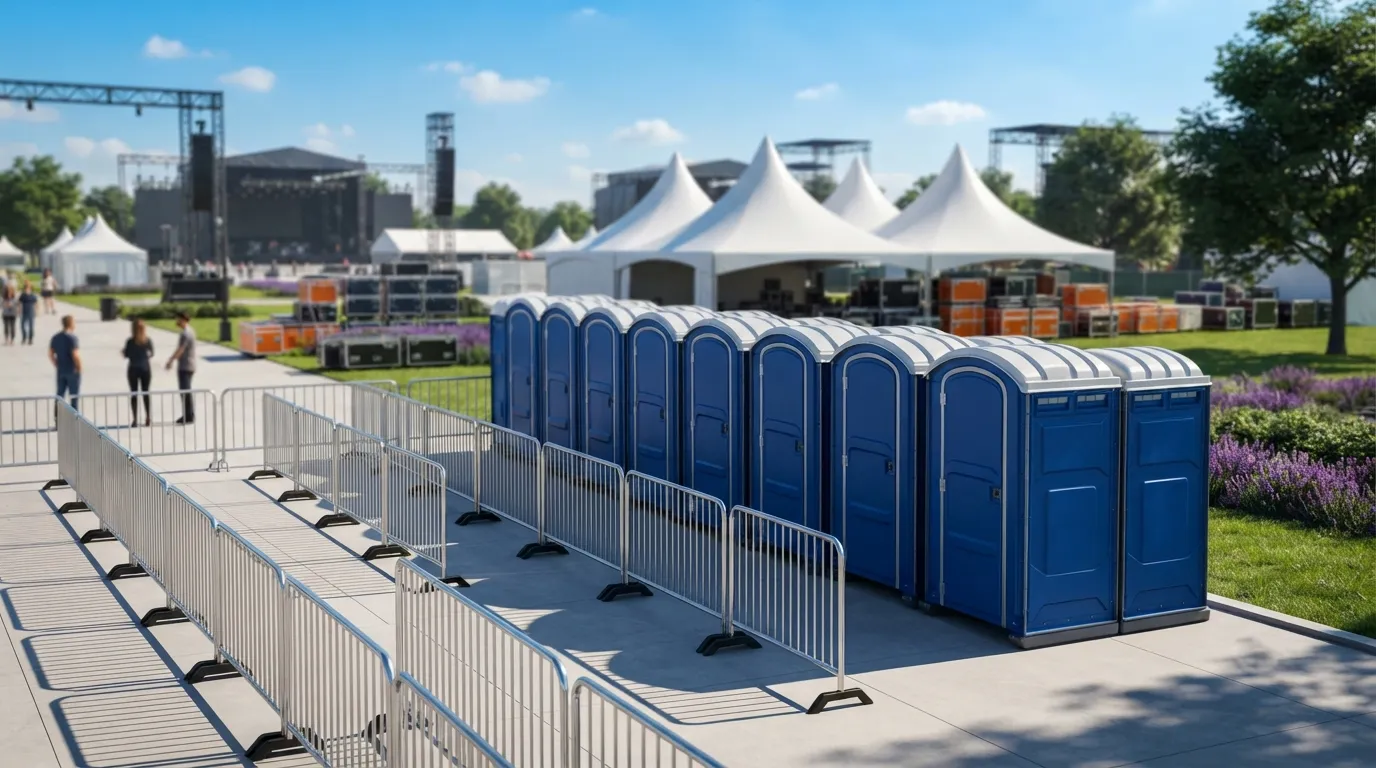
Course restrooms work differently than a job site. Runners pass a station once and move on, so you cluster units at mile markers, aid stations, and both corrals rather than spreading them evenly. A common approach: standard units every mile, with a heavier concentration at the start line where everyone gathers 20 to 30 minutes before the gun. Race organizers in West Covina should also plan one ADA accessible porta potty per cluster, matching ADA Standards 213.2, which calls for at least 5 percent of clustered units to be accessible, never fewer than one. A 60 inch turning circle inside each ADA unit, per ADA Standards 304.3.1, matters more at a race than a construction site, since wheelchair racers and spectators both need clear access. If your event draws a bigger field, check our guide on sizing porta potty counts before you lock the layout. West Covina races that finish near a park or school lot should also budget a few handwashing stations at the food and medical tents, since 29 CFR 1910.141(d)(2) requires soap and towels, not sanitizer alone, everywhere hands actually get washed.
What does it cost to rent restrooms for a race?
Race weekend pricing runs on a weekend or event rate, not a straight daily rate, because delivery, setup, and pickup all happen inside a tight window.
| unit | weekend | event |
|---|---|---|
| standard | $125 - $400 | $200 - $800 |
| ADA | $199 - $300 | -- |
| restroom trailer | $900 - $3,000 | $2,499 - $3,899 |
A standard unit weekend rate through West Covina Porta Pros typically lands in that range depending on count and route length; see our porta potty rental cost page for the daily and weekly breakdowns. Races with a VIP tent or a finish-line hospitality area often add a restroom trailer or a luxury restroom trailer for sponsors and staff, since a trailer offers real plumbing where a standard unit won't cut it. Larger fields sometimes split the difference with a 4 stall restroom trailer at the finish and standard units on the route itself.
Where should restrooms be placed along the course?
Placement drives everything else. A unit set too close to the curb blocks a wheelchair route; one set too far off the shoulder gets missed by runners scanning for it mid-race. Our porta potty placement guide covers ground clearance and door swing, but races add a wrinkle: barricades and timing mats. Where a course runs temporary fencing along a corral, ANSI D6.1 barricade standards under OSHA 1926.202 apply to worker safety zones near the finish. If your race also runs a light tower or a generator for a finish-line stage, that setup often includes a temporary power pole; knowing how to brace a temporary power pole against wind and foot traffic matters as much as restroom placement, since a knocked-over pole near a restroom cluster is a hazard for runners and spectators both. West Covina's route options often pass through areas close to Covina, about 4.3 miles northeast, so races that cross city lines should confirm placement rules with both jurisdictions before finalizing the map. If your event needs generator power near the finish, check our temporary power pole and light tower rental pages for setup details.
Races that also draw a large support crew, cleanup teams, or vendor trucks may need temporary fencing around staging zones, plus crowd control barriers at the corrals. If the event includes food vendors, add a portable sink rental near the concession area, since 29 CFR 1910.141(d)(2) covers food handling wash stations too. For races near La Puente, roughly 4.8 miles southwest, or Walnut, about 5.8 miles southeast, coordinate delivery timing early since our trucks need clear access for setup before dawn road closures begin.
How far in advance should I book race restrooms?
Book 4 to 6 weeks out for a race of any size, longer if your date falls on a busy spring or fall weekend when West Covina hosts multiple events. Early booking locks your unit count and avoids a scramble for emergency porta potty rental days before the gun goes off.
Do I need ADA units even for a small race?
Yes. Any clustered group of units needs at least one accessible unit under ADA Standards 213.2, regardless of field size. A 50-runner charity 5k still needs one ADA unit per restroom cluster along the route.
Can restroom trailers work for a marathon finish line?
Yes, and many organizers prefer them for VIP areas or medical tents. A restroom trailer offers real sinks and better throughput than standard units when finish-line traffic peaks all at once.
What happens to restrooms during the race itself?
Units stay in place and get serviced only if the race runs multiple days. A single-day race typically needs no mid-event service, since the baseline visit interval under ANSI/PSAI Z4.3 assumes continuous multi-day use, not a few hours of race traffic.
Should restrooms be placed before or after each mile marker?
Just before, so runners see them while approaching rather than after passing. Pair that placement with clear signage and keep a 36 inch clear path per ADA Standards 403.5.1 so wheelchair racers aren't boxed in by spectators.
Next step
Get a delivery date
Tell us the address, the dates and the headcount. We size the order and confirm the route.